Over the last few years, past and present members of the Research Support team have contributed to a wide range of web resources, services, and projects.
-

- OSS Watch provides unbiased advice and guidance on the use, development, and licensing of free and open source software.
-

- The Text Encoding Initiative (TEI) is a consortium which collectively develops and maintains a standard for the representation of texts in digital form.
-

- The OUP Data Visualization project aimed to demonstrate how interactive data visualizations can replace statics images in journal articles.
-

- Visualising research data in 3D with Blender designed pipelines for importing research data into the modelling and rendering application Blender, to produce high quality images, animations and interactive applications.
-
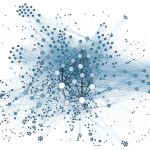
- The Live Data Project focused on preparing data to create interactive visualizations that can be embedded in websites.
-
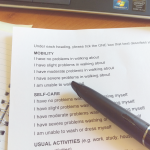
- The Participant Data Project explored how researchers working with personal information could benefit from better data management
-
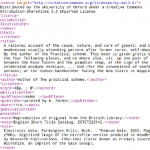
- The Oxford Text Archive: a repository of literary, linguistic and historical textual materials for use in research.
-
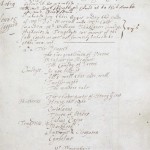
- The Stationers’ Register Online was a pilot project to digitise records of the stationers company in TEI P5 XML.
-

- The ORDS Open Sourcing Project oversaw the adaptation of the Online Research Database Service into a fully open-source software package.
-
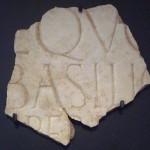
- The I.Sicily project created a digital corpus of the inscriptions of ancient Sicily in EpiDoc, a TEI subset.
-

- DiXiT was an EC Marie Curie Initial Training Network on Digital Scholarly Editions.
-

- This Bodleian project unified the TEI Manuscript Description catalogues in the Bodleian. We acted as schema consultants.
-
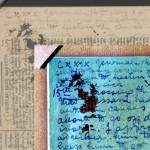
- The Livingstone Online Enrichment and Access Project (LEAP) created high-resolution multi-spectral images and full text (TEI) transcriptions of Livingstone’s field manuscripts and letters.
-
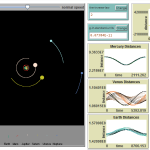
- The Behaviour Composer software is to help build agent-based models of complex systems such as exoplanets, epidemics, wealth inequality and migration.
-
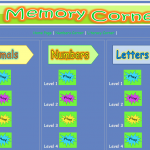
- We supported this project in the Department of Education, involving working memory training and learning arithmetic.
-
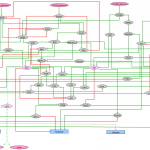
- We supported a project modelling cancer cells by Oncology Department researchers. The project used the Modelling4All Project software and web services.
-
- The Digital REED project helped the Records of Early English Drama create a digital workflow for the production of their volumes,
-
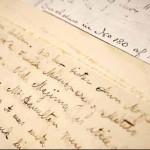
- In the 1870 Field Diary project, we helped Livingstone Online with the TEI markup.
-
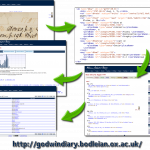
- The William Godwin’s Diary project was an eXist XML Database website providing full text and hi-res images for 48 years of this important diary.
-
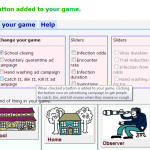
- The Epidemic Game Maker – an example of agent-based modelling public outreach
-
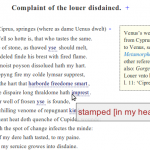
- The Verse Miscellanies Online project converted, edited, and published several early verse miscellanies.
-
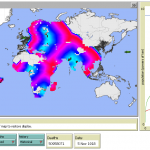
- A model of the Spanish Flu Pandemic built in the Behaviour Composer
-
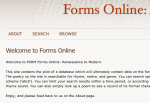
- The Poetic Forms Online project worked to add metrical analysis to poetic texts.
-
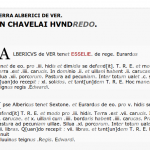
- The Great Domesday Text pilot project converted bespoke XML markup to TEI P5 XML and rendered as HTML.
-
- The French Oral Narrative Corpus project created a corpus of French storytelling, see also frenchoralnarrative.qub.ac.uk
-

- The Jisc DaMaRO Project developed a pilot research data management infrastructure within the University of Oxford.
-

- The Online Research Database Service (ORDS) provided researchers with a tool for organizing, analysing, and sharing datasets online.
-
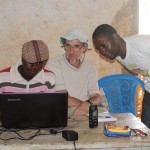
- The OUP John Fell OxGAME project explored the use of agent-based modelling in participatory research with farmers in Cameroon.
-
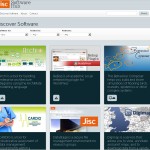
- The Jisc Software Hub project developed a website showcasing Jisc-funded software.
-

- VALS worked with universities and free and open source software communities to give students real-world experience working in software projects.
-
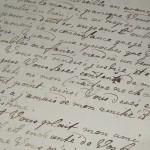
- The CatCor pilot project created digital editions (in TEI) of the correspondence of Catherine the Great.
-
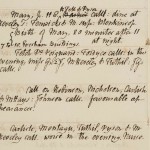
- William Godwin’s Diary transcribed, edited, and marked up all 48 years of the diary of Mary Shelley’s father William Godwin
-
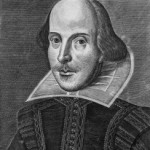
- The First Folio Phase 2 project was a collaboration with the Bodleian